
Post-Surgery Care
Find Post-Surgery Care at Home
CareMatch at Home helps families search for non-medical caregivers who may be able to provide short-term assistance after a hospital stay or outpatient procedure.
Returning home after surgery can be difficult when everyday activities such as walking, bathing, preparing meals, and driving are temporarily harder than usual.
Share the expected discharge date and the help likely to be needed at home. Depending on the caregivers available, CareMatch may introduce your family to up to two people to consider.
Free caregiver matching for families.
CareMatch is a matching service and does not provide medical care or supervise caregivers. Your family chooses the caregiver and agrees on the services and payment terms directly.
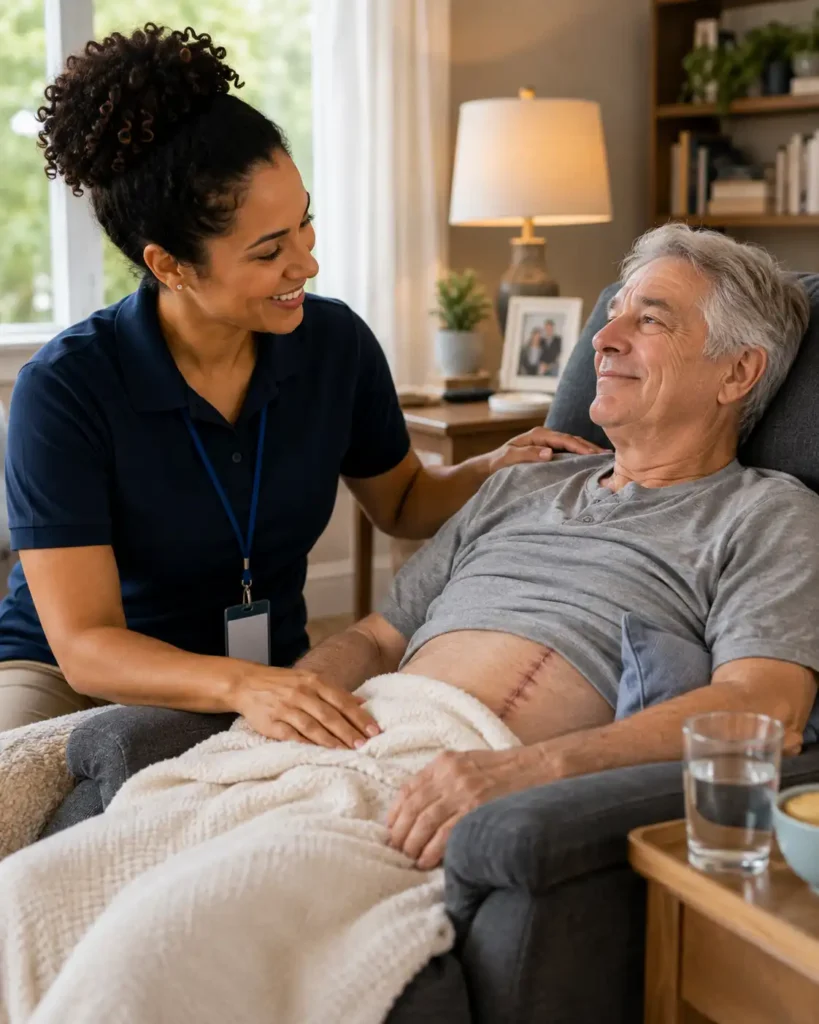
Start With the Discharge-Day Plan
Before your loved one returns home, identify what help will be needed during the transition from the hospital or surgery center.
Confirm how transportation will be handled, whether an adult escort is required, and who will be present when the person arrives home. Consider whether stairs, long walkways, limited parking, or locked entrances could affect the plan.
Families should also decide which activities cannot be managed alone during the first hours at home. Sharing these details can help CareMatch search for a caregiver at the requested time.
Plan the Visits
Build a Short-Term Recovery Schedule
The amount of assistance needed may change during the first days or weeks at home. Some people need several hours of help at one time, while others need shorter visits at specific times of day. A short-term schedule may include:
- A requested visit when the person returns home
- Morning or evening visits
- Several hours of daytime help
- More than one visit in a day
- Overnight visits when offered by the caregiver
The plan may last for one visit, several days, or a few weeks. The requested location, start date, visit length, and schedule can affect which caregivers may be able to help.
Confirm the visit times and expected duration directly with the caregiver. Visits can be adjusted as your loved one becomes able to manage more activities independently.
Families who need continuous daytime and overnight assistance can also explore 24-hour care.
What We Cover
Help With Everyday Tasks During Recovery
After surgery, normal routines may be difficult to manage without temporary help. The caregiver’s role should focus on the agreed non-medical activities needed at home.
Personal Routines
Help with bathing, dressing, grooming, and similar non-medical tasks.
Meals & Household Needs
Simple meal preparation, laundry, and light cleanup.
Moving Around the Home
Walking assistance and agreed transfers when the caregiver has relevant experience with the required method.
Share any activity restrictions that affect the agreed duties. The caregiver should not be asked to perform tasks outside the visit plan.
Families needing regular bathing, dressing, or toileting assistance beyond the recovery period may also consider personal care.
How CareMatch Searches for Short-Term Caregiver Help
Timing can be important when someone is returning home after surgery. Sharing the planned return-home date, preferred visit schedule, and required assistance gives CareMatch a clearer search to work with.
CareMatch looks for caregivers whose experience and schedules may appear to fit the request. Your family should confirm relevant experience directly during conversations with each caregiver.
CareMatch makes the introduction, while your family decides whether the caregiver is suitable. Duties, visit times, rates, and service terms are discussed directly before moving forward.
Need Caregiver Help After Discharge?
Tell CareMatch when help may be needed and which daily activities may require assistance.
Free matching for families. No obligation.
Getting to Appointments
Transportation and Follow-Up Appointments
Tell CareMatch whether the request includes transportation home, travel to follow-up appointments, or someone to accompany your loved one in a family-arranged vehicle.
Not every caregiver offers driving services. Some may drive, while others may meet the person at home or accompany them in a family vehicle, taxi, or rideshare. Confirm these details directly:
Transportation Method
Who will drive and which vehicle or service will be used.
Appointment Assistance
Whether the caregiver will accompany the person, wait during the appointment, and help with the return home.
Timing & Costs
How delays, mileage, parking, and other transportation charges will be handled.
Ask the hospital or surgery center whether an adult escort is required. Confirm directly with the facility whether the planned escort meets its discharge requirements.
Combine Family Help With Caregiver Visits
Short-term caregiver visits can cover the hours family members cannot manage during the first days or weeks at home.
A caregiver might visit during the day while a relative covers evenings. Another plan may use caregiver visits for meals, personal routines, or mobility assistance while family members handle transportation and appointments.
Decide which duties family members will provide and which should be assigned to the caregiver. This creates a clearer schedule and reduces uncovered periods.
When the Recovery Plan Includes Skilled Home Health
Non-medical caregiver help is different from skilled home health care. Medical assessments, treatments, and decisions requiring clinical judgment must be handled by appropriately licensed professionals.
A hospital, surgeon, or other qualified healthcare professional may arrange skilled nursing, ordered wound care, injections, medication administration, or physical, occupational, or speech therapy.
A hospital, surgeon, or other qualified healthcare professional may arrange skilled nursing, ordered wound care, injections, medication administration, or physical, occupational, or speech therapy.

When it is unclear whether a requested task is medical, confirm it with the surgeon, discharge team, or another qualified healthcare professional.
Get Ready
Prepare the Home Before Recovery Begins
Before caregiver visits begin, confirm that the main areas of the home are accessible and that required household supplies or recommended equipment are ready.
Home Access
Clear the main walking route and explain any stairs, narrow entrances, locked doors, or parking limitations.
Daily Items
Place toiletries and frequently used household items within easy reach.
Equipment
Make sure mobility or bathroom equipment recommended for the recovery plan is available and set up according to the provider’s instructions.
Share relevant home-access and equipment details when requesting a caregiver. Equipment selection and use should follow guidance from the medical team or equipment provider.
Confirm the Details
Review the Post-Surgery Plan Before Care Begins
Before choosing a caregiver, confirm the exact non-medical duties and terms of the short-term service.
Duties & Schedule
The agreed tasks, start date, visit times, and expected duration.
Rates & Payments
The hourly rate, minimum visit length, payment method, and cancellation terms.
Transportation Costs
The hourly rate, minimum visit length, payment method, and cancellation terms.
Communication & Cancellations
The hourly rate, minimum visit length, payment method, and cancellation terms.
Ask about the caregiver’s experience with the specific assistance required and confirm that they are comfortable accepting the duties.
Discuss any changes to the schedule or responsibilities before adding them to the service plan.
CLIENT REVIEWS
What Our Customers Say
Families arranging post-surgery care at home use CareMatch at Home to find non-medical caregivers who can help with mobility, meal preparation, light household tasks, errands, and everyday routines during recovery.
“After my mother’s surgery, she needed extra help getting through her normal routine at home. CareMatch at Home connected us with a caregiver who helped with meals, mobility, and everyday tasks while she recovered.”
Rachel T.
- Newton, MA · Daughter
“Dad came home after surgery and was not ready to handle everything by himself. CareMatch at Home helped us find dependable post-surgery support for meals, light household tasks, and getting comfortably through his day.”
Brian S.
- Framingham, MA · Son
“We needed short-term help for Mom after an outpatient procedure, especially with errands and daily activities. CareMatch at Home made finding a caregiver straightforward and matched us with support that fit her recovery schedule.”
Amanda J.
- Scottsdale, AZ · Daughter
Get Started Today
Plan Help for the Return Home
Tell CareMatch when your loved one is expected home and what non-medical assistance may be needed during recovery.
Caregiver matching is available in supported communities across Massachusetts and in the Phoenix and Dallas areas.
Free caregiver matching for families. No obligation.
Common Questions
Frequently Asked Questions (FAQs)
Explore More CareMatch at Home Services
24-Hour Home Care
Get dependable around-the-clock support that helps your loved one remain safe and comfortable at home.
Companion Care
Enjoy meaningful companionship and daily engagement that help your loved one feel connected and supported.
Dementia Care
Get compassionate daily support that promotes familiar routines, comfort, safety, and greater peace of mind.
Meal Preparation
Enjoy fresh, nutritious meals prepared around your loved one’s preferences, needs, and daily routine.
Personal Care
Receive respectful assistance with bathing, grooming, dressing, and other personal routines at home.
Senior Transportation
Get safe, reliable transportation and accompaniment for appointments, errands, shopping, and social activities.
Respite Care
Take time to rest and recharge while a trusted caregiver provides dependable support for your loved one.
Serving Your Area
Find Care in Your City
CareMatch at Home serves families across the United States’ fastest-growing senior markets.