
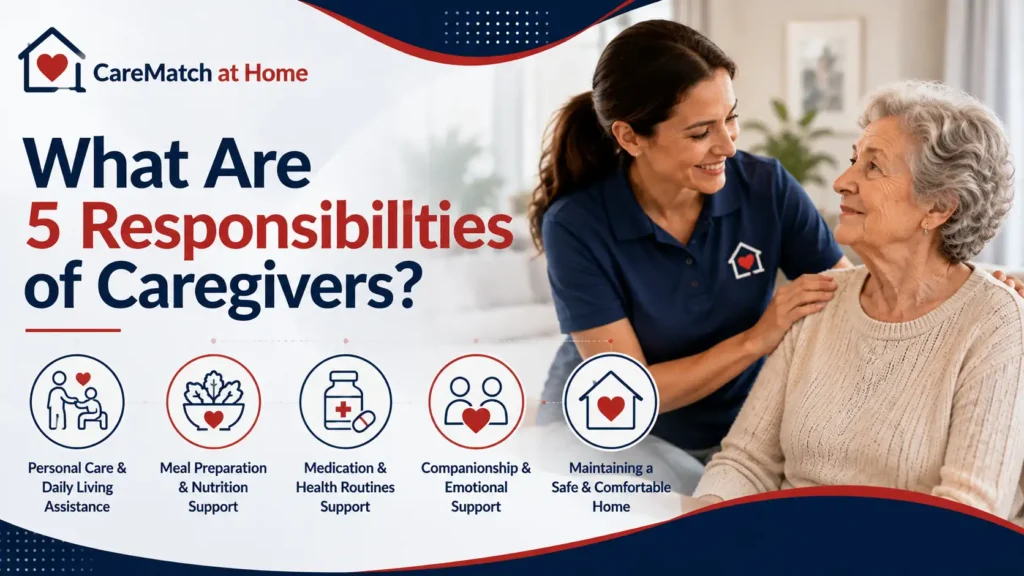
Caregivers commonly have five core responsibilities: providing personal care and daily living assistance, preparing meals and supporting nutrition, supporting medication and health routines, providing companionship and emotional support, and maintaining a safe and comfortable home. The exact duties depend on the person’s needs, the caregiver’s role, training, and applicable requirements.
Caregiving can also involve transportation, mobility assistance, light housekeeping, appointment support, maintaining routines, and communicating important changes to family members or healthcare professionals. A good caregiver does more than complete these tasks. They protect dignity, encourage independence, communicate clearly, remain patient, and recognize when additional support is needed. This is the kind of practical, non-medical in-home support families can explore through CareMatch at Home.
The right approach is always tailored to the individual. Someone living with dementia may need more help with routines and memory support, while someone with mobility challenges may need greater assistance with movement and personal care. For families in communities across Massachusetts, Texas, Arizona, and other CareMatch service areas, professional in-home support can make daily caregiving more manageable while helping a loved one remain safely and comfortably at home.
What Is A Caregiver?
A caregiver is someone who provides support to another person who needs help with everyday activities, health-related routines, safety, mobility, or emotional well-being. Caregivers may support older adults, people living with disabilities, people recovering from illness or injury, or individuals who need ongoing assistance at home.
Caregiving can be provided by a family member, friend, professional home caregiver, or another trained care worker.
The exact duties depend on the person’s needs and the caregiver’s role. A professional caregiver providing non-medical home care, for example, may help with bathing, dressing, meals, companionship, light housekeeping, and transportation. A licensed healthcare professional may have a different scope of practice.
Family Caregivers Vs. Professional Caregivers
Family caregivers often provide support because of their relationship with the person receiving care. Their responsibilities can gradually expand as needs change.
Professional caregivers provide care as part of their employment and usually work according to an agreed care plan and the services they are qualified and permitted to provide.
The distinction matters because caregiver responsibilities are not one-size-fits-all. What a family caregiver does may be very different from what a professional caregiver is hired to do. The purpose is to help the person remain as safe, comfortable, independent, and engaged as possible.

What Are The 5 Responsibilities Of Caregivers?
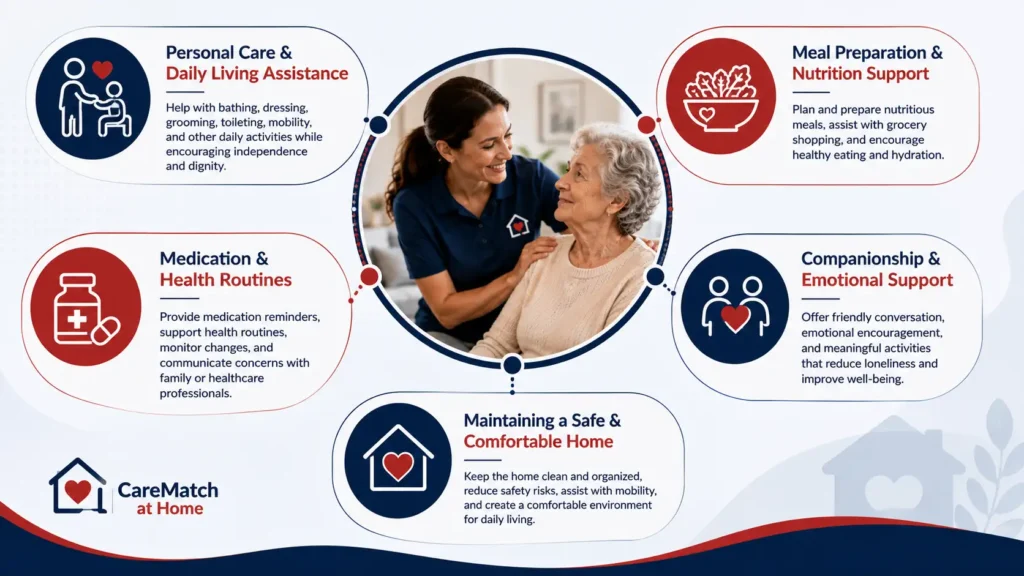
The five most common caregiver responsibilities are personal care, nutrition support, medication and health routines, companionship and emotional support, and maintaining a safe home environment.
These responsibilities overlap in real life. Preparing a meal, for example, can involve nutrition, companionship, mobility, and safety at the same time.
1. Providing Personal Care And Daily Living Assistance
Personal care is one of the most important responsibilities of many caregivers. Depending on the person’s abilities, this can include assistance with everyday activities such as bathing, grooming, dressing, toileting, eating, and moving around the home. The goal is not to take over everything the person can do independently.
A good caregiver looks for ways to support independence rather than unnecessarily replace it. For example, someone may be able to choose their clothing but need help putting it on. Another person may be able to brush their teeth but need reminders to begin the routine.
That difference matters. Caregiving should provide the right amount of assistance while allowing the person to participate in their own care whenever possible.
2. Preparing Meals And Supporting Nutrition
Food is another major part of day-to-day caregiving. A caregiver may plan simple meals, prepare food, help with grocery shopping, encourage regular meals, and make sure the person has convenient access to drinks and snacks. Nutrition support can become particularly important when someone has difficulty remembering to eat, preparing food independently, standing for long periods, or managing household tasks.
A caregiver may also notice changes in appetite or eating habits and communicate those changes to the appropriate family member or healthcare professional. Meal preparation can provide more than nutrition, too. Cooking a familiar meal can create routine and comfort. Sitting together during a meal can provide companionship. Even small tasks, such as setting the table, can encourage participation and independence.
3. Supporting Medication Routines And Health Needs
Medication-related support is another responsibility that often appears in home caregiving, but the exact role depends on the caregiver’s qualifications, the care plan, and applicable laws. For some caregivers, this may mean providing reminders so a person does not forget a scheduled medication.
Other health-related responsibilities may include helping the person prepare for appointments, supporting mobility, observing changes in their normal condition, or communicating concerns to family members and healthcare professionals. The important distinction is between supporting a health routine and providing skilled medical care.
Caregivers should not perform medical tasks outside their training, authorization, or legal scope simply because a family expects them to. If a person’s condition changes significantly, the appropriate healthcare professional should be involved.
4. Providing Companionship And Emotional Support
Caregiving is not only about physical tasks. Loneliness, boredom, anxiety, and loss of independence can have a major effect on a person’s quality of life. Companionship gives the person someone to talk with, spend time with, and participate in everyday activities alongside.
A caregiver might:
- Talk with the person about their interests
- Read together
- Play music
- Take a walk
- Look through photographs
- Play a simple game
- Accompany them to an activity
- Share a meal
For someone living with dementia or memory loss, familiar conversation and activities can also help maintain a sense of connection. The caregiver’s presence can make ordinary parts of the day feel less isolating.
5. Maintaining A Safe And Comfortable Home
A caregiver can also help make the home environment safer and easier to navigate. This may involve keeping commonly used areas organized, reducing obvious hazards, assisting with mobility, and completing appropriate light housekeeping tasks. Safety concerns can vary widely.
A person with mobility difficulties may need clear walking paths. Someone with memory problems may need additional supervision around certain household activities. Another person may simply need help keeping frequently used rooms organized.
The caregiver’s role is not to turn the home into a clinical environment. It is to identify practical obstacles and help create an environment where the person can function as safely and comfortably as possible.

Other Common Duties Of A Caregiver
The five responsibilities above cover the core of many caregiving roles, but caregivers often perform additional duties depending on the person’s care needs.
Transportation And Appointment Support
Getting to appointments, grocery stores, community activities, or social visits can become difficult when someone can no longer drive safely or needs assistance getting around. A caregiver may provide transportation or accompany the person while another approved transportation service handles the driving.
Appointment support can also mean helping the person prepare for the visit and remembering important information they need to bring.
Mobility And Physical Activity Assistance
Caregivers may help someone move safely around the home, get in and out of a chair, walk, or participate in appropriate daily activities. Maintaining movement can also support independence and quality of life. However, caregivers should follow the person’s care plan and training when assisting with mobility. Tasks requiring specialized clinical skills should be handled by appropriately qualified professionals.
Light Housekeeping And Household Tasks
Caregiving often includes practical household support.
This may involve:
- Laundry
- Changing bed linens
- Washing dishes
- Tidying commonly used areas
- Taking out trash
- Basic grocery shopping
The purpose is usually to support the person’s daily living environment rather than provide full household cleaning services.
Communication With Family And Care Teams
Communication is one of the responsibilities that can be easy to overlook. A caregiver spends significant time with the person, so they may notice changes that others do not see immediately.
For example, they might notice that someone is eating less, sleeping differently, becoming more confused, struggling with mobility, or behaving differently than usual. Communicating appropriate observations to family members or the relevant care team can help everyone respond sooner.
Supporting Daily Routines And Memory Care
Consistent routines can make everyday life easier for many people who need ongoing care. A caregiver may help maintain familiar schedules for meals, activities, appointments, personal care, and rest.
For someone living with dementia, routine can be particularly useful because too many changes can create confusion or distress. The goal is not to control every minute of the person’s day. It is to create enough structure to make important activities predictable while still allowing flexibility.
What Are The Duties And Responsibilities Of A Good Caregiver?
Being able to complete tasks is only one part of being a good caregiver. How those tasks are performed matters just as much. A strong caregiver combines practical support with patience, communication, reliability, observation, and respect.
Compassion And Patience
Caregiving can involve repeated questions, slow routines, changing moods, or tasks that take much longer than expected. Patience helps the caregiver respond to the person rather than reacting to frustration. Compassion means remembering that difficult behavior may have an underlying reason.
Communication And Active Listening
Good communication is more than giving instructions. A caregiver should listen, speak clearly, and pay attention to verbal and nonverbal cues. Simple communication can be especially important when someone has memory, hearing, language, or cognitive difficulties.
Reliability And Flexibility
People receiving care often depend on predictable routines. A reliable caregiver arrives when expected, follows the agreed care plan, and communicates when circumstances change. At the same time, caregiving requires flexibility. A person’s needs may change from one day to the next.
Observation And Problem-Solving
Caregivers are often in a good position to notice small changes. A good caregiver does not diagnose a medical condition based on those observations. Instead, they recognize when something seems different and communicate the concern to the appropriate person. That combination of observation and good judgment can be extremely valuable.
Respect For Privacy, Dignity, And Independence
Personal care can feel vulnerable. A caregiver should protect the person’s privacy, explain what they are doing, involve them in decisions when possible, and avoid treating an adult like a child. Even when someone needs substantial assistance, they should still have choices wherever safely possible.
What Are The Limits Of A Caregiver’s Responsibilities?
Caregiver duties depend on the person’s needs, the type of care being provided, the caregiver’s training, and applicable state or local requirements. Not every caregiver can perform every task.
Non-Medical Care Vs. Skilled Nursing Care
Non-medical home care commonly focuses on daily living, companionship, household support, transportation, personal care, and similar needs. Skilled nursing involves clinical responsibilities that require appropriate professional credentials and authorization. For that reason, families should clarify exactly what services a caregiver can provide before care begins.
When A Caregiver Should Involve A Healthcare Professional
Caregivers should not be expected to diagnose or independently treat new medical problems. A sudden change in behavior, unexplained pain, significant difficulty breathing, a serious injury, or another concerning change requires appropriate medical attention. The caregiver’s role is often to notice, communicate, and support, not to replace the healthcare professional.
Recognizing When Additional Support Is Needed
Sometimes the biggest caregiving challenge is not a single task. It is the accumulation of dozens of small responsibilities. Meals. Laundry. Appointments. Personal care. Companionship. Medication reminders. Safety. Household tasks.
When these responsibilities become too much for one family member, additional support may be necessary. Asking for help does not mean the family has failed. It can be the practical step that allows everyone to provide better and more sustainable care.
How Caregiver Responsibilities Depend On Individual Needs
There is no universal caregiver job description that fits every person. The responsibilities change according to health, mobility, cognitive ability, preferences, living environment, and level of independence.
Caring For Someone With Dementia Or Memory Loss
A person with dementia may need more support with routines, communication, personal care, meals, safety, and companionship. Caregivers may also need to respond to repetitive questions, confusion, agitation, wandering, or changes in behavior. The approach should remain person-centered. Familiar routines and activities can help, while unnecessary arguments or corrections may increase distress.
Supporting Someone With Mobility Challenges
Someone with limited mobility may need more assistance with movement, dressing, bathing, transportation, household organization, and everyday activities. Safety becomes particularly important. Caregivers should follow appropriate instructions and training rather than improvising physical transfers or other tasks that require specialized knowledge.
Helping Someone Who Needs Assistance With Daily Activities
Some people need only occasional support, while others require help throughout much of the day. The caregiver’s responsibilities should reflect what the person actually needs rather than removing independence simply because help is available.
A useful question is: “What can this person safely do for themselves, and where do they genuinely need support?” That question helps keep care focused on independence as well as assistance.
How Caregivers Can Provide Better Day-To-Day Support
Good caregiving is not about doing more tasks as quickly as possible. It is about providing the right support in a way that respects the person.
Maintain Consistent Routines
Predictable routines can make daily activities easier. Try to keep important parts of the day reasonably consistent while allowing room for changes and personal preferences.
Encourage Independence Where Possible
Give the person opportunities to make choices and participate in daily activities. Someone may be able to fold laundry, choose a meal, select clothing, or prepare part of a simple task even if they need help with other parts. Small amounts of independence can preserve confidence and dignity.
Balance Safety With Quality Of Life
Safety matters, but eliminating every possible risk can also eliminate meaningful activities. The goal should be reasonable safety without unnecessarily restricting the person’s independence, social life, or enjoyment.
Keep Families And Care Teams Informed
Clear communication prevents small concerns from becoming missed information. Families and care professionals should understand important changes in the person’s needs, routines, preferences, and overall condition. When everyone has the same basic picture, care becomes more coordinated.
Need Help Managing Caregiving Responsibilities at Home?
When caregiving responsibilities start to feel like more than your family can comfortably manage, CareMatch at Home can help you find the right non-medical in-home care option. Whether your loved one needs help with personal care, meals, companionship, mobility, dementia care, or daily routines, CareMatch connects families with vetted local providers based on their needs, schedule, and location. The matching service is free for families and is available across supported communities in Massachusetts, Texas, Arizona, and other service areas nationwide. Check the locations we Cover
Start by sharing what kind of help your loved one needs, and CareMatch at Home can help you find a suitable caregiver match without the usual search-and-call hassle.
Conclusion
The five main responsibilities of caregivers are personal care and daily living assistance, nutrition and meal support, medication and health routines, companionship and emotional support, and maintaining a safe home environment. These core responsibilities often extend into transportation, mobility support, light housekeeping, appointment assistance, and communication with family or care teams.
Being a good caregiver is not simply about completing a list of duties. Compassion, patience, reliability, communication, flexibility, and respect for independence are equally important. Caregivers also need to understand their limits and involve qualified healthcare professionals when a person’s needs go beyond their role.
For families providing care at home, the responsibilities can gradually become overwhelming. Additional in-home support can make daily care more manageable while helping a loved one remain comfortable and connected in a familiar environment.
Frequently Asked Questions
What Are 5 Responsibilities Of Caregivers?
The five common responsibilities are providing personal care and daily living assistance, preparing meals and supporting nutrition, supporting medication routines and health needs, providing companionship and emotional support, and maintaining a safe and comfortable home.
What Are The Main Responsibilities Of A Caregiver?
A caregiver’s main responsibilities can include personal care, meal preparation, companionship, safety, mobility support, transportation, light housekeeping, medication reminders, and assistance with daily routines. The exact responsibilities depend on the person’s needs and the caregiver’s role.
What Are The Duties And Responsibilities Of A Caregiver?
Caregiver duties may include helping with bathing and dressing, preparing meals, supporting daily routines, providing companionship, assisting with mobility, completing light household tasks, helping with transportation, and communicating relevant concerns to family members or care professionals.
What Are The Responsibilities Of A Good Caregiver?
A good caregiver combines practical skills with compassion, patience, communication, reliability, flexibility, observation, and respect for the person’s privacy and independence. They should also understand their own limits and seek appropriate help when a need falls outside their role.
What Is The Difference Between A Caregiver And A Nurse?
A caregiver generally provides assistance with daily living, personal care, companionship, household tasks, and other non-medical support depending on their role. A nurse is a licensed healthcare professional who can provide clinical assessment and nursing care within their scope of practice.
What Tasks Can A Caregiver Perform?
Caregivers may perform tasks such as personal care, meal preparation, companionship, light housekeeping, transportation, mobility assistance, and medication reminders. Specific duties vary according to the caregiver’s training, the care plan, and applicable laws and regulations.
Can Family Members Be Paid For Providing Care?
In some situations, family caregivers may be eligible for payment through specific government programs, insurance arrangements, or other funding options. Eligibility varies considerably by location and program, so families should check the rules that apply to their circumstances.
Do Caregivers Need Certification Or Formal Training?
Requirements vary according to the type of caregiving role, employer, services provided, and location. Some professional caregiving positions require specific training or credentials, while family caregivers may not have the same formal requirements. Families should verify the qualifications needed for the specific services being provided.