

It may be time for memory care when a person with dementia needs more help than family or caregivers can reliably provide at home. Getting lost, leaving the stove on, missing medicine, or struggling with bathing and dressing can signal a need for more support. The decision also matters when caregiving is affecting a family member’s health or sleep.
This guide explains the warning signs, when care at home may still work, and what to discuss with your loved one’s doctor. It also covers how to compare care options so your family can plan before an urgent situation forces a decision.
What Is Memory Care?
Memory care is residential support designed for people living with Alzheimer’s disease or other forms of dementia. It generally includes help with daily activities, structured routines, and staff trained in dementia care.
Memory care may operate within an assisted living community, a nursing home, or a separate residence. Security measures, medication assistance, and access to medical care vary. Families should ask what each community actually provides.
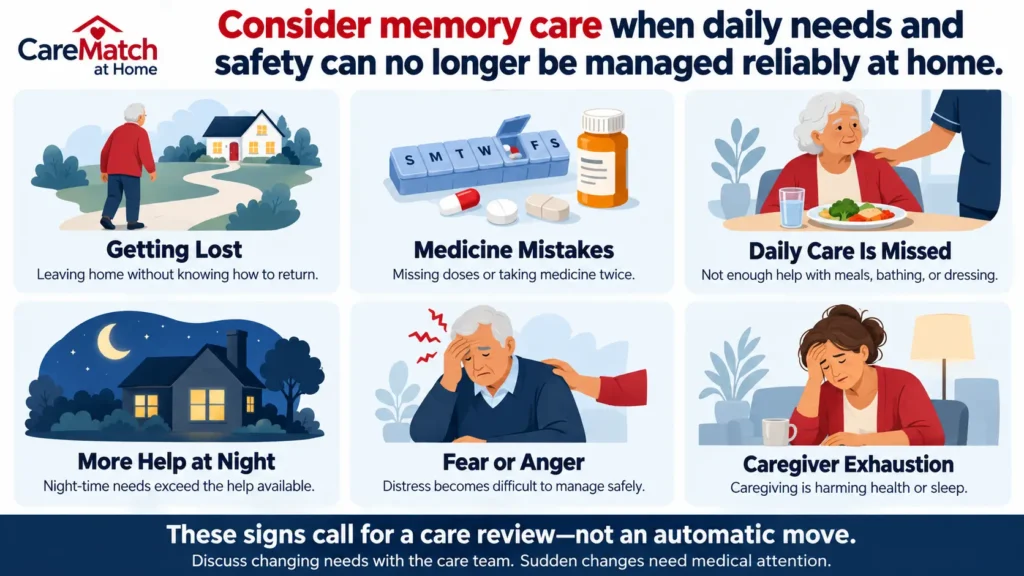
What Signs Suggest It May Be Time for Memory Care?
It may be time to consider memory care when your loved one needs more help than they receive at home. Look at how often problems happen, how serious they are, and whether someone can provide the help needed. The Alzheimer’s Association suggests considering home safety, the caregiver’s health, and whether they can manage the care required. The signs below can guide that discussion, but they do not automatically mean your loved one needs to move.
1. Wandering or Getting Lost
Leaving home without knowing how to return safely can mean your loved one needs closer supervision. They may get lost on a familiar street or leave for a job they retired from years ago. Wandering can happen at any stage of dementia, and home safety measures cannot prevent every incident. Check whether someone can stay with them when needed, including evenings and overnight. If they could leave unnoticed, discuss how to provide more reliable support.
2. Missing Medicine or Taking It Twice
Missing doses, taking medicine twice, or mixing up pills can mean your loved one needs more help with medication. Reminders may not work if they cannot remember whether they have taken a dose. The Alzheimer’s Association recommends planning medication support with caregivers, doctors, and pharmacists, and keeping an updated medication list. Find out what help is needed and who can provide it at the right times. Ask any care provider exactly what medication assistance they offer.
3. Unsafe Cooking or Accidents Around the Home
Leaving the stove on, forgetting food in the oven, or using household items unsafely can mean your loved one needs more supervision. Having someone prepare meals may help, but your loved one might still try to cook between visits. Explain these incidents when discussing care options. Check whether changes around the home and additional help can address the risks, especially during times when your loved one is alone.
4. Missing Meals or Struggling With Personal Care
Missing meals, not drinking enough, or struggling with bathing, dressing, and using the bathroom can mean more daily help is needed. Food in the fridge may go untouched if your loved one forgets to eat or needs help during meals. Speak with their doctor about weight loss or new eating problems. Write down which tasks need help and when. Then check whether family members or caregivers can provide that assistance each day.
5. Confusion Makes Daily Tasks Harder
Your loved one may need more support when confusion makes familiar tasks difficult to complete safely. For example, they may need help choosing clothes and getting dressed step by step. A single reminder may no longer be enough. Look at how much guidance they need throughout the day and whether someone has enough time to help. Forgetting a name or repeating a question alone does not mean a move is needed; what matters is how the confusion affects daily life.
6. Fear or Anger Becomes Hard to Manage
Frequent fear, anger, or aggressive behavior may mean your loved one needs a different kind of support. This is especially important if someone could get hurt. Ask their doctor to assess these changes, as pain, illness, medicine side effects, or changes around them may contribute. Sudden changes should not be treated as a normal part of dementia without medical review. When considering care providers, explain what happens and ask how their staff would respond.
7. Falls or Hospital Visits Keep Happening
Repeated falls or hospital visits are reasons to review both your loved one’s health and the help they receive. Ask their care team what may be causing the problems and what support is needed during recovery. Share hospital discharge instructions and details of recent incidents. Find out whether they need help with daily tasks, nursing care, or therapy. Before choosing memory care, confirm that the community can provide or arrange the specific services required.
8. They Struggle to Explain What They Need
Difficulty saying they are in pain, thirsty, or need the bathroom can mean your loved one needs closer attention. When words become difficult, caregivers may need to notice facial expressions, sounds, or changes in behavior. Consider whether those helping your loved one recognize these signs and know how to respond. If their needs regularly go unnoticed, review whether more time, support, or dementia care experience is needed.
9. They Need More Help at Night
Trying to leave home at night may mean your loved one needs overnight support. Some people experience sundowning, which means becoming more confused during the evening and night. Discuss sleep changes with their doctor because other health problems may contribute. If someone needs to stay awake to help, work out who can do this and when they will rest. One caregiver should not have to manage both day and night without enough rest.
10. Caregiving Is Affecting the Caregiver’s Health
Constant tiredness, poor sleep, worsening health, or difficulty with physical care tasks can mean the caregiver needs more support. The Alzheimer’s Association encourages caregivers with signs of stress to speak with their doctor. If enough reliable help cannot be arranged, memory care may be worth discussing. Asking for support does not mean the caregiver has failed.

What Stage of Dementia Needs Memory Care?
The stage of dementia helps families decide, though no two people move through it the same way. Doctors often describe three broad stages: early, middle, and late.
Early Stage: Often Manageable at Home
A person can usually do most things alone, with reminders. This is a good time to plan ahead and try part-time help at home. It is also the best time to set up legal papers and talk about future wishes. Memory care is usually not needed yet.
Middle Stage: More Daily Help May Be Needed
Your loved one may become more confused and need help with bathing, dressing, and eating. Some families can provide this care at home, while others need more support. If their needs become difficult to manage, start exploring care options before an urgent problem forces a quick decision.
Late Stage: Round-the-Clock Care Needs
Help is needed with almost everything, day and night. Some families choose memory care, and others choose full-time help at home. At this stage, comfort and safety matter most. The right setting depends on medical needs, cost, and what the family can handle.
When Should You Seek Urgent Help?
Call 911 if your loved one is missing, seriously injured, or in immediate danger from a fire or violence. Sudden confusion or refusing all food and fluids also needs prompt medical attention. If you are too exhausted or unwell to continue caring safely, ask a trusted family member or care provider to step in and contact the care team for support. Address the immediate problem first, then review whether more help at home or memory care is needed.
How to Choose a Memory Care Community
Visit two or three communities at different times of day. Ask how many staff work each shift, what dementia training they get, how they handle wandering and anger, whether a nurse is on site, what the price includes, and when a resident would have to move out. Watch how staff talk to residents. Look for secure doors, clean rooms, and a full activity calendar with music and time outside. Be careful if you notice strong smells, residents with nothing to do, or unclear answers. Trust your gut.
How to Talk to Your Loved One About Memory Care
A calm and kind talk can help your loved one understand why more care may be needed.
Start Early and Be Gentle
Talk before a crisis if you can. Use short, kind sentences like, “I want you to be safe and cared for.” Do not argue or correct them in front of others. If they get upset, take a break and try again another day.
What If They Refuse?
Refusal is common and is often based on fear. Ask their doctor to explain the need, since many people listen to a doctor more than to family. If they can no longer make safe choices, check who holds power of attorney. An elder law attorney can explain the rules in your state.
Talk to Their Doctor First
Bring a list of falls, wandering, medicine problems, and mood changes. Ask about the stage of dementia and whether memory care is a good fit.
Find the Right Care for Your Family with CareMatch at Home
Not sure if your loved one needs memory care, or if in-home help can still work? CareMatch at Home can help you look at in-home options first. We match families with up to two vetted, background-checked non-medical caregivers based on location, schedule, and care needs.
Our matching service is free for families. You can talk to each provider, compare them, and choose the best fit.
Frequently Asked Questions About Memory Care
When is the right time to put someone with dementia in memory care?
When your loved one is no longer safe at home, needs help with most daily tasks, or the caregiver can no longer keep up. Wandering, medicine mistakes, and falls are common signs.
What stage of dementia requires memory care?
Most people move in the middle stage, when confusion grows and daily help is needed. Safety and daily needs matter more than the stage alone.
How do I know my parent can’t live alone anymore?
Look for getting lost, unsafe cooking, missed medicine, weight loss, unpaid bills, and falls. If they cannot meet basic needs or stay safe, they need more help.
Can a person with dementia refuse memory care?
Yes, many do at first. If they can still make safe choices, keep talking and respect their wishes. If they cannot, someone with legal power, like a health care proxy, may need to decide.
Is memory care the same as a nursing home?
No. Memory care focuses on safety, routines, and calm activities for people with dementia. A nursing home gives more medical and nursing care.
Does Medicare pay for memory care?
Medicare does not pay for long-term room and board or daily help like bathing. It may cover doctor visits and some short-term skilled care.
Is it too late to move someone to memory care?
It is rarely too late. Earlier moves give more time to settle in, but memory care can bring comfort and steady care in later stages too.