
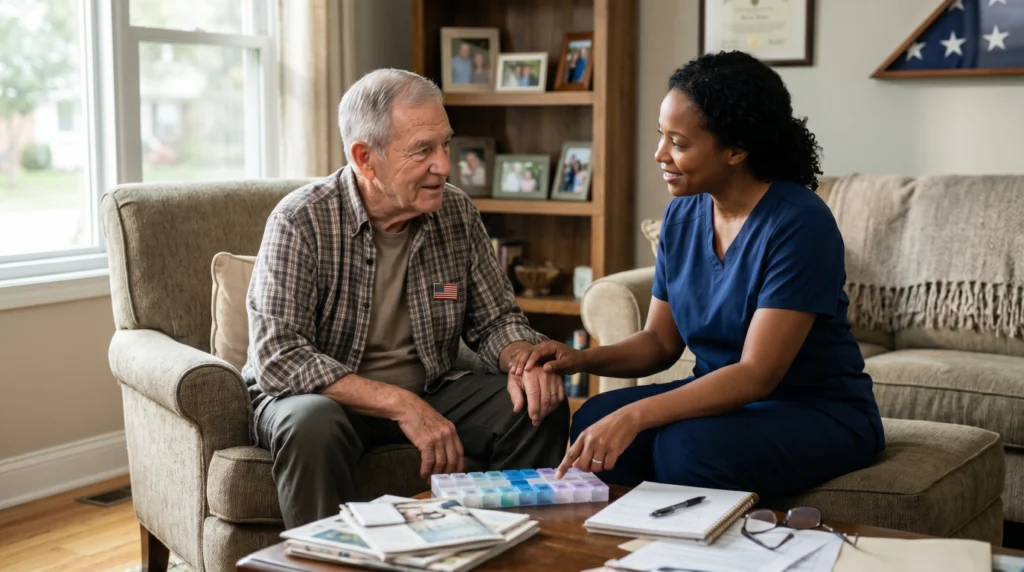
Having a paid caregiver visit your home can make a big difference, especially if walking or getting around has become hard. It gives you a way to keep living on your own terms, in a place you know and trust. Most people know that The Department of Veterans Affairs (VA) provides health care benefits to eligible veterans, including support services delivered right at home.
We provide compassionate in-home care across Massachusetts, for veterans and their families, helping them stay safe, comfortable, and independent in the home they love. Depending on what a veteran needs, services can range from help with bathing and meals to skilled nursing visits and breaks for family caregivers. The VA runs several programs that cover these services at little to no cost for eligible veterans, including the Homemaker and Home Health Aide program.
What Is Veteran In-Home Care?
Veteran in-home care is a category of long-term support services delivered inside a veteran’s home by trained aides, nurses, or therapists. It covers two main areas: non-medical care and skilled medical care. Non-medical care, sometimes called personal care or homemaker services, focuses on daily living tasks.
This includes bathing, dressing, meal preparation, and housekeeping. These services do not require a licensed medical professional to deliver them. Veterans with complex health needs who struggle to travel for appointments are often strong candidates for this type of care.The VA supports both types through several distinct programs, each designed for different levels of need. The overall goal across all of them is the same: helping veterans remain safe.

What Services Are Included in Veteran In-Home Care?
Veteran in-home care services are designed to help veterans live safely and comfortably in their own homes while receiving the support they need. Depending on a veteran’s health condition, daily needs, and VA benefits eligibility, services may include both non-medical assistance and skilled medical care.
Personal Care Assistance
One of the most common reasons veterans need in-home support is help with personal hygiene and grooming. A trained home health aide can assist with bathing, dressing, shaving, oral care, and toileting. For a veteran dealing with a physical disability, chronic pain, or age-related decline, having reliable help with these basics is not just convenient.
Mobility and Transfer Support
In-home caregivers help veterans move safely around the house, assist with walking, and support transfers from a bed to a wheelchair or from a chair to the bathroom. Fall prevention is a key part of this service. Caregivers often work alongside occupational therapists to identify home hazards and reduce the risk of injury.
Medication Reminders
Missing a medication dose can cause serious health setbacks, especially for veterans managing multiple conditions. Home aides help veterans stick to their medication schedule, track when doses are due, and flag any concerns to the supervising nurse. For veterans who can no longer manage pill organizers on their own.
Meal Preparation and Nutrition Support
In-home caregivers can prepare meals based on a veteran’s dietary needs, whether that means low-sodium options for heart conditions. They also monitor hydration, which is commonly overlooked in elderly veterans. Some programs include coordination with a VA nutritionist for veterans with specific dietary restrictions.
Housekeeping and Home Safety
Caregivers provide light housekeeping such as laundry, vacuuming, and kitchen cleaning to keep the living space safe and manageable. They also help organize common areas to reduce trip hazards and make mobility easier. This type of support is included in the Homemaker and Home Health Aide program under the non-medical care category.
Transportation and Appointment Assistance
Getting to a VA clinic or specialist appointment can be a major obstacle for veterans who no longer drive. Caregivers can provide or coordinate transportation for medical visits, grocery runs, pharmacy pickups, and community activities. This keeps veterans connected to their care team and their community, both of which matter for long-term health.
Skilled Nursing and Medical Care
For veterans with more complex needs, the VA provides access to skilled nursing care at home. This includes wound care, catheter management, physical and occupational therapy, speech therapy, and chronic condition monitoring. Some veterans with severe medical needs may qualify for advanced skilled home health services, including prolonged nursing care and ventilator support.
Types of VA Home Care Programs

The Department of Veterans Affairs (VA) offers several home care programs to help veterans receive support while living at home. Eligibility and available services may vary depending on a veteran’s health condition, VA benefits, and location.
Homemaker and Home Health Aide Program
This is the most widely used VA home care program. It provides non-medical support supervised by a registered nurse, and it is available to all enrolled veterans who meet the clinical need and community care criteria. An aide may visit a few times a week or daily depending on the veteran’s assessed needs.
Veteran-Directed Care Program
This program gives veterans more control. Instead of the VA assigning a caregiver, veterans receive a flexible budget and can hire and manage their own caregivers, including family members in some cases. It is designed for veterans who want to make their own choices about who provides their care and how.
Home-Based Primary Care
Home-Based Primary Care (HBPC) is for veterans with serious, chronic conditions who cannot easily travel for regular medical appointments. An interdisciplinary team of VA health professionals, including doctors, nurses, social workers, and therapists, delivers ongoing primary care directly in the veteran’s home.
Hospice and Palliative Care
For veterans with terminal illness or serious life-limiting conditions, the VA provides hospice and palliative care at home. The focus is on comfort rather than curative treatment. This includes pain management, symptom control, emotional and spiritual support, and family counseling.

Who Is Eligible for Veteran In-Home Care Services?
To receive VA in-home care, a veteran must first be enrolled in VA health care. Most veterans who served in active military, naval, or air service and were not dishonorably discharged are eligible to apply for VA health care enrollment.
The VA MISSION Act of 2018 established expanded eligibility for community care, and veterans seeking homemaker or home health aide services automatically qualify for this pathway since the VA does not provide these services directly.
A VA primary care provider or geriatrics team will assess the veteran’s ability to manage daily activities and determine what level of support is appropriate.
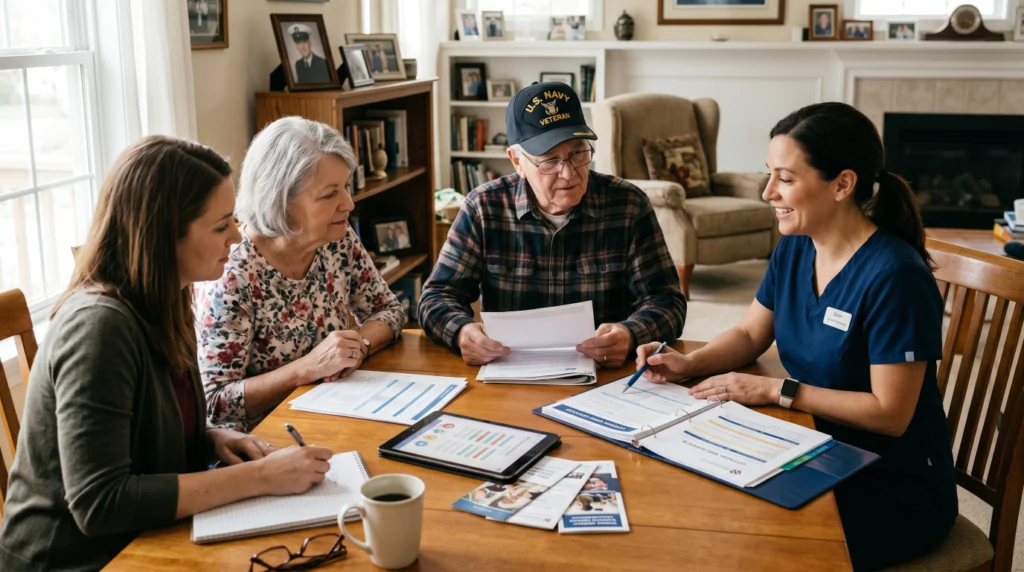
How to Apply for VA In-Home Care Benefits
Applying for VA in-home care does not have to be overwhelming. The process has a few clear steps, and the VA has people in place to help you through each one. The key is to start early, before care becomes urgent.
Speak With a VA Care Coordinator
Your first step is to contact your local VA medical center and ask to speak with a social worker or care coordinator. This person will review your situation, explain which programs you may qualify for, and tell you exactly what documents you need. A care coordinator can save you weeks of back and forth by pointing you in the right direction from the start.
Gather Required Medical Documents
Before your assessment, collect the veteran’s medical records, diagnosis history, and any documentation of physical limitations or daily care needs. You will also need proof of VA health care enrollment and military discharge papers, commonly known as the DD-214.
Complete the VA Assessment
A VA clinical team will evaluate the veteran in person. They look at the veteran’s ability to manage daily activities, their medical conditions, and what level of support makes sense. This assessment determines which services the veteran qualifies for and how many hours of care will be approved.
Choose an Approved Home Care Provider
Once approved, you will select a provider from the VA Community Care Network. The VA contracts with both public and private home care agencies to deliver these services. Your care coordinator can help match you with an approved provider in your area.
How Much Does Veteran In-Home Care Cost?
The cost of VA in-home care varies from person to person. Some veterans pay nothing at all, while others may have a small copay depending on their priority group, disability rating, and the specific program they use. A VA social worker is the best person to give you a clear picture of what to expect based on your specific situation.
For personal care through the Homemaker and Home Health Aide program, a copay may apply depending on the veteran’s disability status. The actual out-of-pocket cost depends on the program, the veteran’s priority group, their disability rating, and whether they are also using Medicare or Medicaid.
Challenges Families Should Consider
VA in-home care is a strong option, but it comes with real-world limitations. Service availability varies significantly by location.Coverage has limits too. Some services, like 24-hour continuous care, are not typically covered unless the veteran qualifies for the expanded private-duty nursing benefit. Family members often need to fill gaps, which is why understanding what is and is not covered matters before relying on VA support alone.
How to Choose the Right Veteran Home Care Provider
Choosing the right home care provider starts with making sure they are approved by the VA and properly licensed in your state. Ask about how their caregivers are trained, screened. A good provider will always work under the oversight of a registered nurse and conduct background checks on all staff before placing anyone in a veteran’s home.
Beyond credentials, pay attention to how well the agency communicates. They should provide a written care plan and stay in regular contact with the veteran’s VA care team.
Is Your Veteran Ready for the Support They Deserve?
At CareMatch at Home in Massachuetts, we make finding the right in-home caregiver for your veteran simple, personal, and completely free for families. Book your appointment, we serve veterans and their loved ones across Massachusetts. You do not have to navigate VA programs alone or spend weeks searching for someone you can trust. Our team personally matches you with up to two pre-screened, background-checked caregivers who fit your veteran’s needs and personality, within 48 hours.
Conclusion
Veteran in-home care covers far more than most people realize. From personal hygiene and meal preparation to skilled nursing and palliative care, the VA has built a network of programs to keep veterans safe and supported in their own homes. The key is knowing what exists and taking action early, before a health crisis forces rushed decisions.
Choosing home care over institutional care is a deeply personal decision. But for many veterans, it is also the right one. With the right VA programs in place, that choice becomes much more manageable.
Frequently Asked Questions
What services are included in veteran in-home care?
Veteran in-home care includes personal care, meal preparation, medication reminders, housekeeping, companionship, transportation and respite care for family caregivers. Specific services depend on the program a veteran qualifies for.
Does the VA pay for in-home caregivers?
The VA pays for in-home caregivers through programs like the Homemaker and Home Health Aide (H/HHA) program, the Veteran-Directed Care program, and the Aid and Attendance benefit. Eligibility depends on enrollment in VA health care and clinical need.
Who qualifies for VA in-home care services?
Veterans enrolled in VA health care who need help with daily activities due to age, illness, or disability may qualify. The VA also considers disability rating and whether the service is available in the veteran’s area.
What is not covered under VA home care?
VA home care does not always cover 24-hour around-the-clock care, home modifications, or services for non-enrolled veterans. Coverage also depends on the specific program and the veteran’s priority group.
How many hours of care does the VA provide?
The VA does not set a fixed number of hours. Care frequency, such as a few hours a week to daily visits, is based on the veteran’s assessed needs and may be adjusted over time.