

Families often hear the terms memory care and dementia care used as though they mean the same thing. They are closely connected, but they do not describe the same type of care arrangement.
Dementia care is the broader term. It includes assistance for someone living with Alzheimer’s disease or another form of dementia and can be provided in different settings, including the person’s home. Memory care is a specialized residential form of dementia care for people who need a structured living environment and ongoing help.
Understanding this distinction can make it easier to compare care settings. This guide explains the key differences and the factors to consider when choosing care for your parent or loved one.
What Is Dementia Care?
Dementia care refers to help for someone living with Alzheimer’s disease or another form of dementia. It is not one specific service or setting. The level of care may vary from occasional visits to daily or around-the-clock assistance.
The goal is to help the person remain safe, comfortable, and involved in everyday life. Care may include assistance with personal routines, meals, transportation, and social activities. Caregivers may also offer calm reassurance during periods of confusion, anxiety, or changes in communication or behavior.
Because dementia affects each individual differently, care should reflect what they can manage, along with their preferences, routines, and safety requirements.
Where Can Dementia Care Be Provided?
Dementia care may be provided in the person’s home, through an adult day program, or in a residential setting such as assisted living or memory care.
Some families rely on one care arrangement, while others combine services. For example, someone may receive help at home on certain days and attend an adult day program at other times.
What Does In-Home Dementia Care Include?
With in-home dementia care, someone can receive assistance while remaining in their own home. Services vary by care plan and may include:
- help with bathing, dressing, and grooming
- meal preparation and assistance with eating
- medication reminders
- companionship and meaningful activities
- transportation and errands
- help maintaining familiar daily routines
- safer movement around the home
- respite care for family caregivers
Care may be scheduled for a few visits each week or provided daily, overnight, or through 24-hour home care, depending on the amount of assistance required.
The Alzheimer’s Association notes that in-home care can help someone living with dementia remain in familiar surroundings while giving family caregivers additional help.

What Is Memory Care?
Memory care is a specialized form of residential care for people living with Alzheimer’s disease or another type of dementia. It may be offered in a standalone community or in a dedicated area within assisted living or another senior living setting.
Because memory care is residential, housing is included along with daily care. The model commonly includes structured routines, a closely monitored environment, and staff available throughout the day and night.
Services, staffing, and the amount of personal assistance offered can vary between communities.
Common Features of Memory Care Communities
Memory care communities may include:
- monitored or secured entrances and exits
- structured daily routines
- staff trained to assist people living with dementia
- activities adapted to residents’ interests and abilities
- meals, housekeeping, and laundry services
- clear signs and easy-to-follow paths
These environments are often designed to be easier to navigate and to encourage a calmer daily routine. Families should ask what the monthly fee covers and how the community adjusts care when a resident requires additional assistance.

What Is the Difference Between Memory Care and Dementia Care?
The difference is mainly one of scope and setting. Dementia care can be delivered in several ways, while memory care refers to a residential model built specifically around dementia-related care.
| Factor | Dementia Care | Memory Care |
| Scope | Covers a range of care options | One residential option within that range |
| Where care is provided | At home, through community services, or in residential care | In a dedicated community or memory care unit |
| Housing | May or may not be included | Included |
| How the term is used | Describes the type of care a person receives | Describes a residential setting where that care is provided |
In-Home Dementia Care vs. Memory Care: Which Option May Be Right?
The choice often comes down to whether care can be provided consistently at home or whether a residential setting would offer a more dependable arrangement. There is no single sign that determines when one choice is better than the other.
When In-Home Dementia Care May Be Appropriate
In-home care may be a good fit when the necessary assistance can be arranged through a reliable schedule. It may also suit someone who feels comfortable in familiar surroundings and benefits from keeping established routines.
This arrangement is easier to maintain when family members and professional caregivers can share responsibilities consistently. Families should also consider who can step in when the regular caregiver is unavailable.
The home should continue to meet the person’s mobility, comfort, and day-to-day care requirements as circumstances change.
When Memory Care May Be a Better Fit
Memory care may become a more practical option when the care available at home is no longer enough. This could involve frequent supervision, help during the night, or repeated attempts to leave the home without recognizing the risk.
A move may also make sense when everyday routines remain difficult even with assistance, family caregivers can no longer maintain the required level of care, or the home cannot be adapted appropriately.
Families should consider how often these concerns occur and whether they can still be managed through an in-home arrangement. It is also important to think about how caregiving is affecting both the person receiving care and those helping them.
How Do Memory Care and In-Home Dementia Care Costs Differ?
In-home dementia care is often priced by the hour, although rates can vary by provider, location, and schedule. The total monthly amount mainly depends on the number of care hours and whether assistance is provided during the day, overnight, or on weekends.
Memory care is generally charged as a monthly residential fee. That fee may include housing, meals, housekeeping, activities, and some personal care services. Additional care-level charges may apply when a resident requires more assistance.
Families should compare the full cost of each arrangement rather than looking only at the starting price. When someone remains at home, regular household expenses continue alongside caregiving costs. A memory care fee often combines housing, meals, and care-related services into one monthly charge.
Ask each provider or community what is included, which services cost extra, and how charges may change if additional care is required.
Cost matters, but it should not be the only factor in the decision. For more detail, our guide to in-home care costs in 2026 explains hourly rates and estimated monthly costs.
Questions to Ask Before Choosing Dementia Care
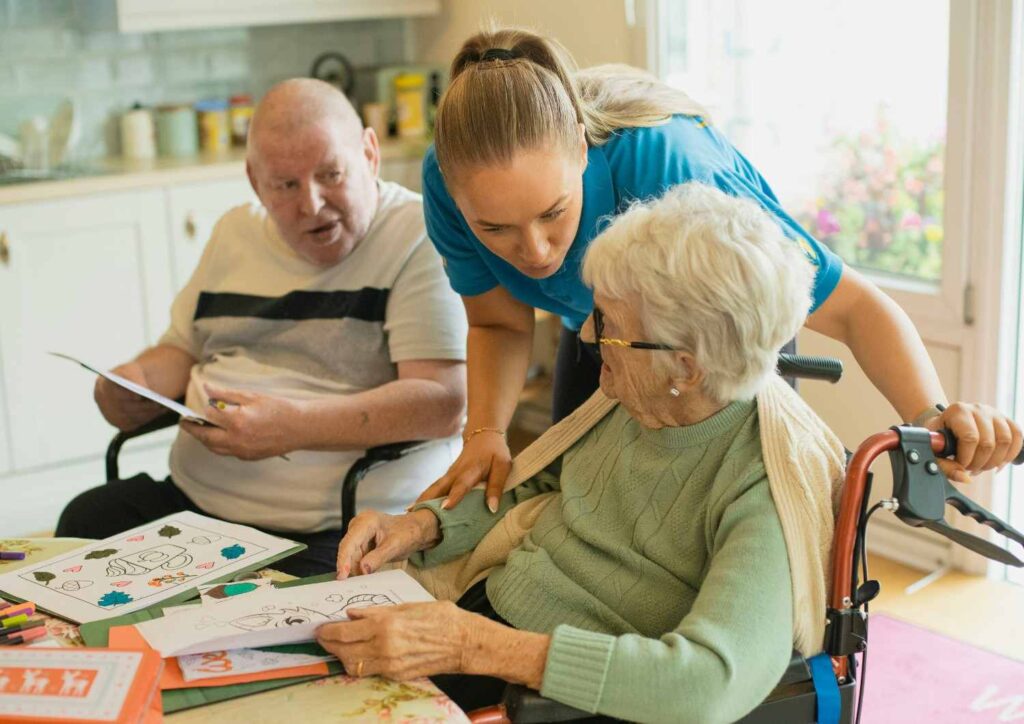
A short list of practical questions can help families compare in-home providers and memory care communities more clearly.
- How much help and supervision does my loved one require during the day and at night?
- Which personal routines or daily activities now require assistance?
- What care can family members provide consistently?
- What dementia-care experience and training do the caregivers or staff have?
- What is included, what costs extra, and how can the arrangement change if additional help is required?
Families should also notice how clearly each provider answers questions, responds to concerns, and keeps them informed. This can help determine whether the provider can continue offering the right level of care over time.
Find In-Home Dementia Care With CareMatch at Home
Comparing local care options can feel more manageable when your family has guidance. CareMatch at Home connects families with up to two vetted in-home care providers based on location, schedule, and the amount of assistance required.
The matching service is free for families. You can speak directly with each provider, compare availability and rates, and make an informed choice for your loved one.
Start your CareMatch search to explore available in-home dementia care options.
Frequently Asked Questions
Is memory care the same as dementia care?
No. Dementia care can be provided in different settings, while memory care refers specifically to specialized residential care for people living with dementia.
Can dementia care be provided at home?
Yes. Professional caregivers can offer personal assistance, companionship, meal help, medication reminders, and other non-medical services in the person’s home. Care may be arranged for occasional visits, daily help, or overnight coverage.
Does everyone with dementia eventually need memory care?
No. Some people remain at home with help from relatives and professional caregivers, while others move into residential care. The decision depends on individual circumstances rather than a fixed stage or timeline.
When should someone move to memory care?
Memory care may be considered when the care available at home can no longer provide enough consistent assistance. Families may also benefit from discussing the situation with the person’s care team and the providers they are considering.
Is in-home dementia care less expensive than memory care?
Not always. In-home care may cost less when only a few hours are needed, while daily, overnight, or around-the-clock assistance can increase the total. Memory care generally combines housing and care within one monthly fee.